
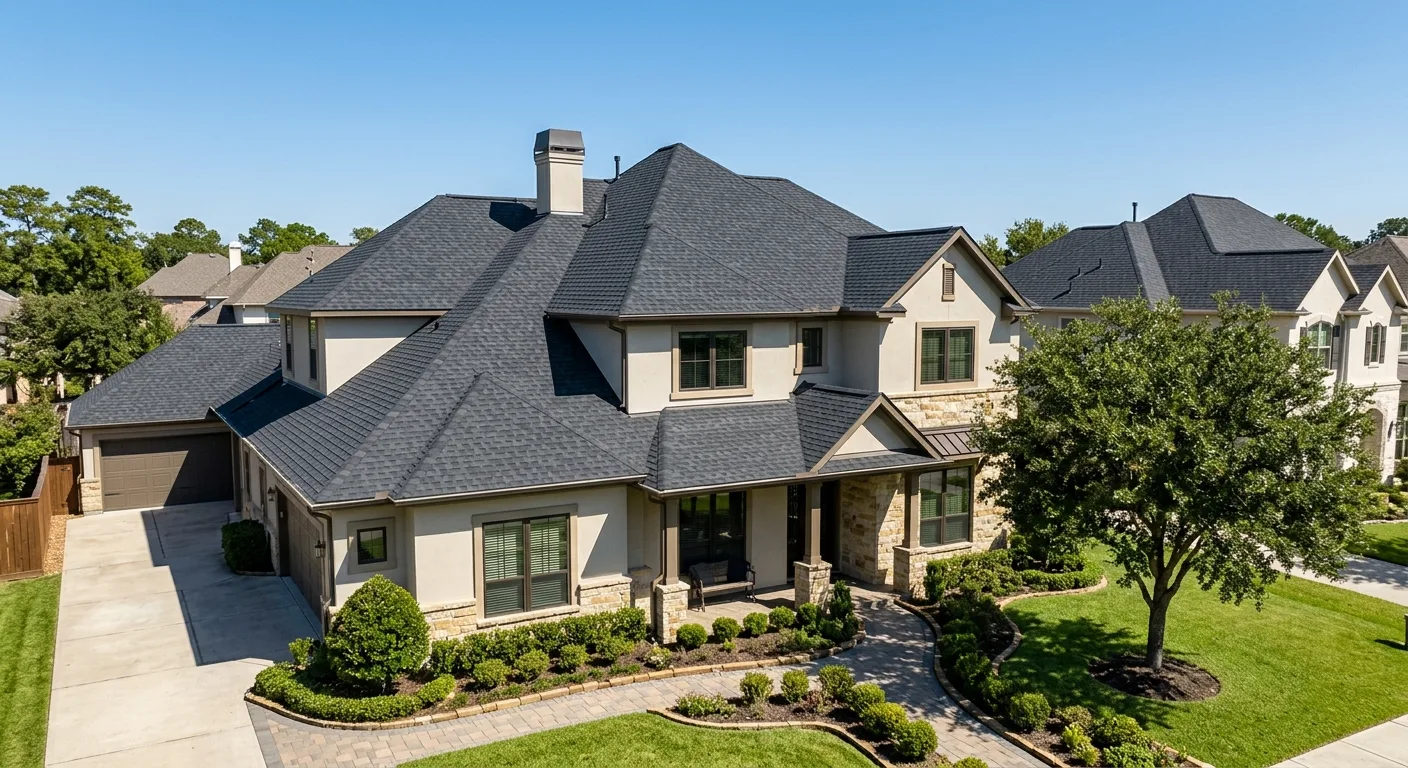
Family-owned · Houston Local
Roof Replacement
From the first inspection to the final shingle, handled by a crew with 14 years in the trade.
Get a quote
Tell us what you need
Three fields. It reaches a person here, not a call centre.
When Your Roof Needs Replacing
Roof replacement is one of the biggest decisions a homeowner makes, and the most common question we hear is: how do I know if I actually need a full replacement versus a repair? The short answer is that a roof failing in multiple places, especially after years of Gulf Coast storms and punishing summer heat, is usually past the point where patching makes financial sense. If you're seeing curled shingles, soft spots in the decking, or water stains spreading across your attic ceiling, those are signs the whole system has reached the end of its useful life. Ahomeservices has been doing this work for 14 years and carries 4.7 stars across 24 Google reviews. Call (832) 244-5652 and we'll give you a straight answer about where your roof stands.
The cost of a roof replacement depends on several factors: the square footage of your roof, the pitch (steep roofs cost more to work on safely), the roofing material you choose, the condition of the decking underneath, and how many layers of old shingles need to come off before we can start fresh. Asphalt shingles are the most common choice and the most cost-effective starting point. Impact-resistant shingles carry a premium but can lower your insurance premiums in storm-prone areas, which is worth a conversation before you decide. Every job is different. Contact Ahomeservices for an accurate estimate.
Signs Your Roof Has Run Its Course
Most roofs give you warnings before they fail completely. Here is what to look for.
Curling or Missing Shingles
Shingles that cup, curl at the edges, or go missing after storms are not just cosmetic. They mean the granule layer is gone, the mat underneath is exposed, and water is finding its way in. One missing shingle in a field of good ones is a repair. Shingles curling across multiple slopes is a replacement conversation.
Water Stains in the Attic
If you've got brown rings or soft drywall on upper ceilings after rain, the water is already inside the structure. We trace those stains back to the entry point, which is usually compromised flashing around a chimney, skylight, or valley, or simply shingles that have lost their seal. Either way, don't wait.
Granules in the Gutters
Asphalt shingles shed granules as they age. A little is normal. If your gutter cleaning is turning up thick layers of black grit every season, that's the surface coat leaving for good. Without it, UV breakdown accelerates fast, and a roof that looked fine last year starts failing by next summer.
Sagging Decking or Soft Spots
Press a broom handle gently against your roof slope from inside the attic. If the decking moves or feels spongy, it's been holding moisture for a while. Rotted decking changes the scope of a replacement job, but catching it before a collapse is still far cheaper than repairing the interior damage that follows.
Age Past 20 Years
Standard three-tab asphalt shingles are rated for 20 to 25 years. Architectural shingles stretch that to 30, sometimes more, depending on attic ventilation and sun exposure. If you don't know when the last roof went on, check your closing documents or ask us to take a look. A roof that's outlived its warranty isn't a gamble worth taking.
Flashing Failure Around Penetrations
Chimneys, vents, skylights, and pipe boots are where most slow leaks begin. The roofing material itself can be fine while flashing rusts, separates, or was never sealed properly in the first place. Good replacement work resets every penetration, not just the shingles around it.
How It Works
Our Replacement Process, Step by Step
- 01
Inspection and Assessment
We get eyes on your roof and your attic before we talk numbers. We check shingle condition, flashing integrity, decking health, ridge and soffit ventilation, and any areas of past repair. You get a factual account of what we found, not a sales pitch.
- 02
Tear-Off and Decking Prep
We strip the old roofing down to bare decking, replace any rotted or compromised boards, and install ice-and-water shield in the valleys and around every penetration before a single shingle goes down. Skipping this step is how cheap jobs become expensive problems two years later.
- 03
Installation and Cleanup
New felt or synthetic underlayment, starter strip, field shingles, ridge cap, and all new flashing go on in order. When we're done, we walk the grounds with a magnetic roller to pull any nails that came off the roof, and we haul all debris away. Your yard looks the same as when we arrived.
Materials
Choosing the Right Roofing Material
- 01
Architectural Asphalt Shingles
The most common choice for good reason. Dimensional shingles give a layered look, 30-year rated performance, and broad availability of replacement shingles if you ever need a section matched. They handle Gulf Coast weather well and carry the best value-per-year of any option.
- 02
Impact-Resistant Asphalt Shingles
Class 4 rated shingles are designed to survive large hail without cracking. In areas where insurance carriers offer premium discounts for impact-resistant roofing, the upgrade cost can pay for itself within a few policy cycles. Worth asking your insurer before you finalize a material choice.
- 03
Metal Roofing (Standing Seam or Panels)
Metal lasts 40 to 70 years, sheds rain and debris fast, and reflects radiant heat, which matters in a Texas summer. The upfront cost is roughly two to three times asphalt. If you plan to stay in your home long-term and want to be done with roof work, the math often works out.
- 04
Roof Underlayment and Decking
Whatever shingle goes on top, the materials underneath determine how the roof performs over time. Synthetic underlayment outperforms traditional felt for moisture resistance and tear strength. Ice-and-water shield in the valleys and at eaves is standard for us regardless of what the code minimum is.
Protect the Rest of Your Home While You're At It
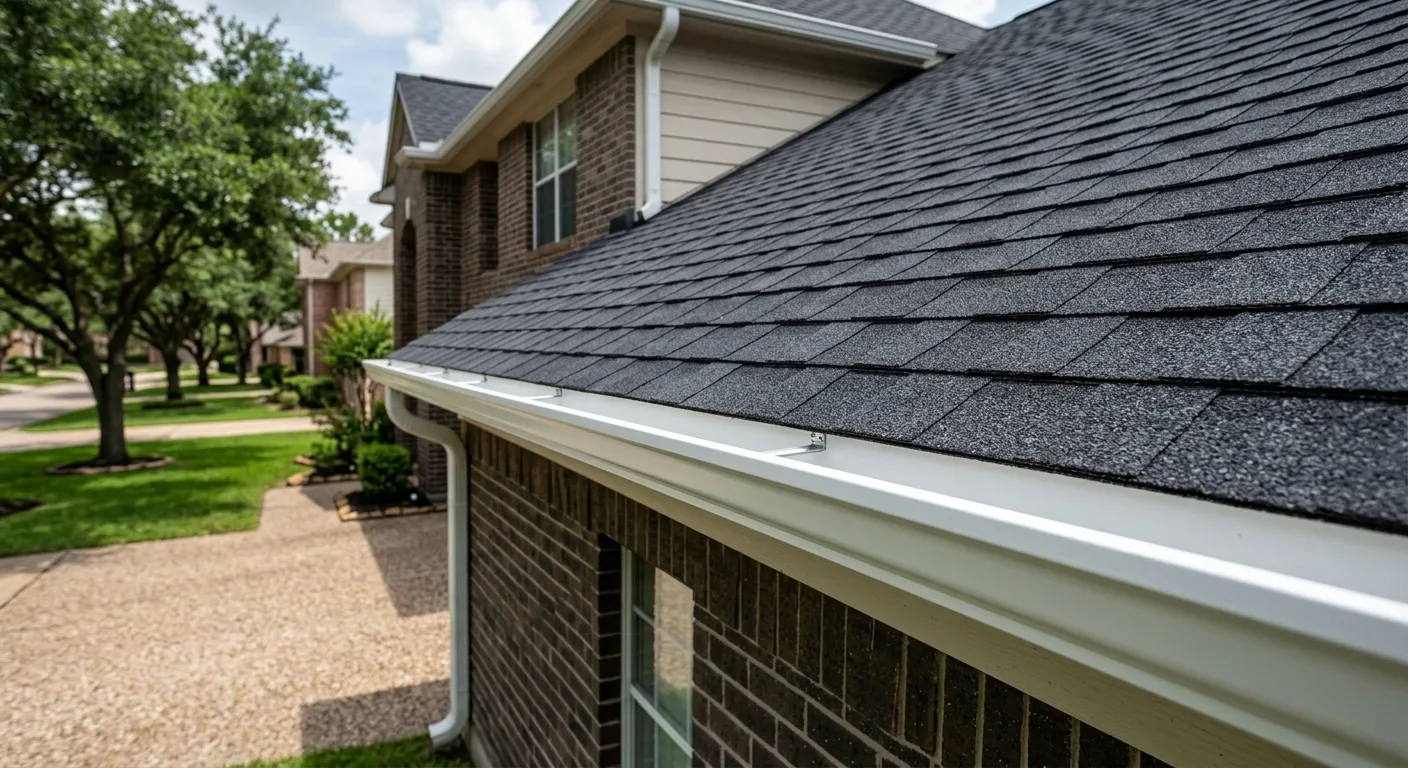
What We Won't Do
A few things we've decided aren't worth doing, regardless of what a customer asks for.
Roof Over an Existing Layer Without Inspection
Adding shingles on top of an existing layer saves labor cost upfront but hides whatever is failing underneath. We won't put new roofing over decking we haven't seen. If there's rot or moisture damage under the old shingles, it will destroy the new roof from the inside out.
Skip the Attic Check
A roof and its attic are one system. Poor ventilation will cook shingles from below and cut their rated life in half. We look at ridge vents, soffit vents, and insulation baffles as part of every assessment. A new roof on a poorly ventilated attic is a short-term fix.
Pressure You Into a Full Replacement
If your roof needs a repair, that's what we'll tell you. We've sent homeowners away without a replacement job because it wasn't the right call for their situation. That's the only way we've stayed in business for 14 years. For broader home maintenance needs, see our home maintenance services.
Roof Replacement Questions, Answered
What is the average cost to replace a roof?
How much does it cost to replace a roof on a 2,000 square foot house in Texas?
How do I know if I need a full replacement or just a repair?
How long does a roof replacement typically take?
What happens to my gutters during a roof replacement?
Will my homeowner's insurance cover a roof replacement?
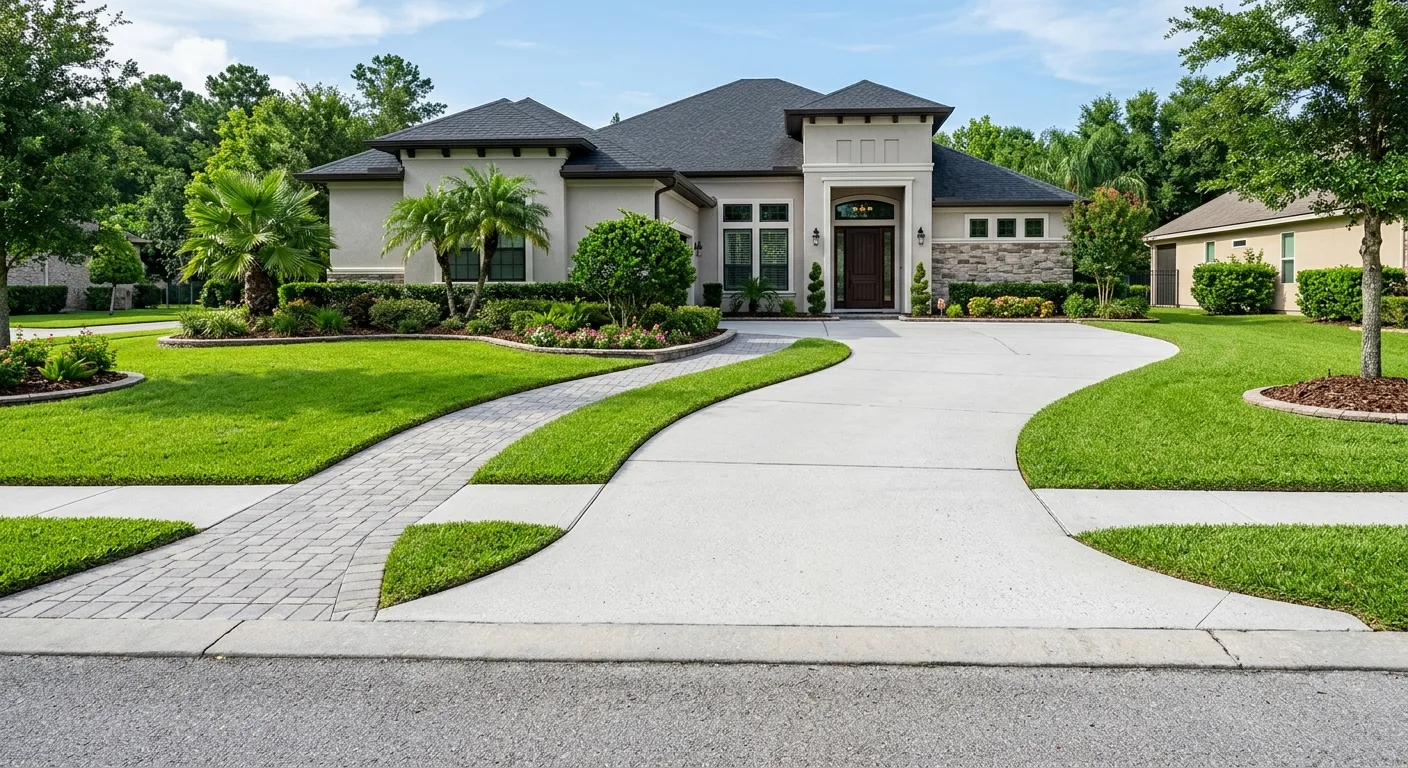
Ready to Get Your Roof Assessed?
Call (832) 244-5652 or reach us at ahomeservices123@gmail.com. We serve homeowners across the Greater Houston area, including Sugar Land, Humble, and Pasadena.
Call now (832) 244-5652- 4.7 on Google, 24 reviews
- Local, owner-operated
Takes 30 seconds
Get your quote
Leave your details and we'll call you back to set a time.